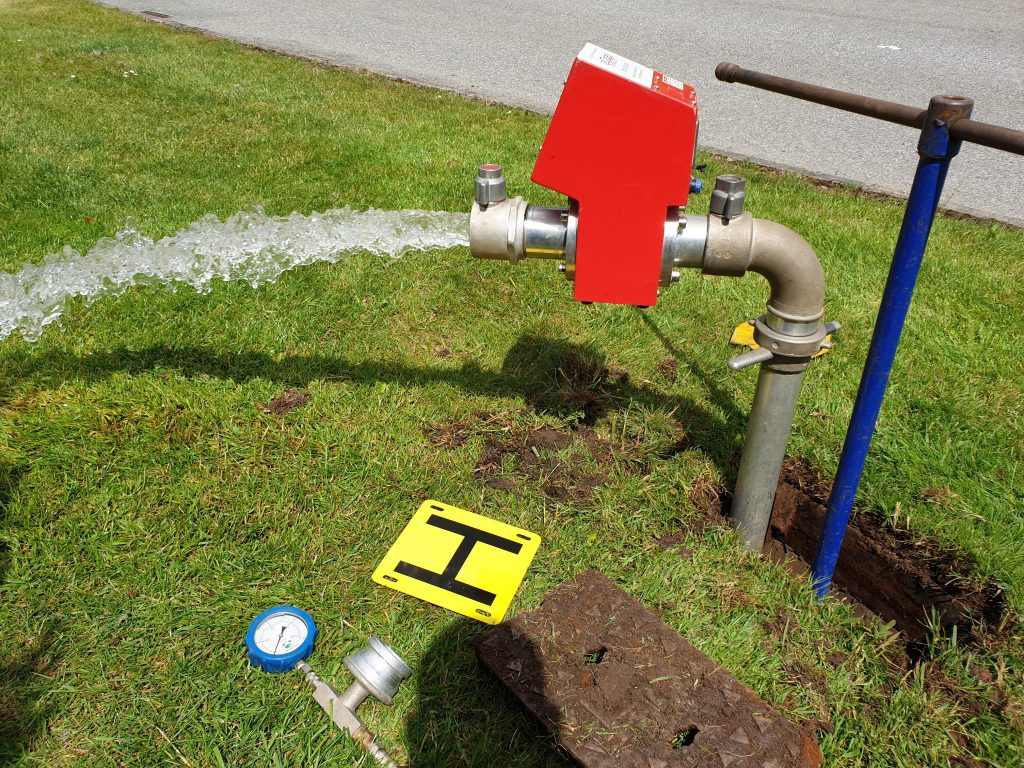
Fire hydrant testing is the process used by fire departments or water utilities to ensure hydrants are functioning properly and can provide adequate water flow in an emergency. Here’s a clear overview:
What Fire Hydrant Testing Involves
Flow Testing
Measures how much water (gallons per minute) the hydrant can deliver.
Helps determine if the water pressure is sufficient for firefighting.
Pressure Testing
Checks static pressure (pressure in system when water isn’t flowing).
Checks residual pressure (pressure during active flow).
Operational Testing
Ensures the hydrant opens/closes smoothly.
Ensures valves, caps, and threads aren’t seized or damaged.
Confirms the hydrant drains properly after use.
Inspection of Condition
Looks for rust, leaks, missing caps, or structural damage.
Ensures hydrant visibility and accessibility (not blocked by vegetation, snow, or parked cars).
Why Fire Hydrant Testing Matters
Confirms hydrants will work in an emergency.
Helps identify issues like low pressure, valve failures, or obstructions.
Supports accurate fire flow maps used by fire departments.
Helps maintain ISO (Insurance Services Office) ratings, impacting local insurance premiums.
What Residents May Notice
Temporary discoloration of water due to stirred-up minerals in pipes.
Slight pressure drops during testing.
Crews opening hydrants and collecting flow readings.
These effects are temporary and usually clear after running indoor faucets for a few minutes.